
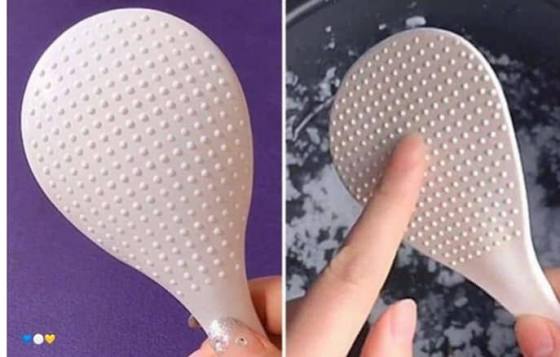
If you have ever used a traditional rice scoop, you may have noticed that some have a slightly textured surface covered with tiny bumps or grain-like dots. At first glance, these small details may appear to be purely decorative.
In reality, the textured surface can serve a practical purpose.
Rice scoops are designed to make serving cooked rice easier, and the small raised areas can help reduce the amount of rice that sticks to the scoop. This simple feature is particularly useful when serving soft, freshly cooked rice that tends to cling to smooth surfaces.
The design may look insignificant, but it reflects how everyday kitchen utensils are often shaped around practical problems.
Why Does Cooked Rice Stick to a Scoop?
Freshly cooked rice contains moisture and starch.
When rice is cooked, starch granules absorb water and become softer. Some of the starch can remain on the surface of the rice grains, making them slightly sticky.
This is especially noticeable with varieties of rice that naturally have a softer or stickier texture.
When a smooth scoop comes into contact with warm rice, the moisture and starch can create enough adhesion for individual grains to remain attached to the utensil.
That can make serving less convenient and may require repeatedly shaking or scraping the scoop.
How the Textured Surface Can Help
The tiny raised bumps on some rice scoops change how the rice comes into contact with the utensil.
Instead of creating one large, continuous smooth surface, the textured design creates small points and spaces between the raised areas.
This can reduce the amount of direct contact between the rice and the scoop.
As a result, rice may be less likely to form a large sticky layer across the surface.
The exact effectiveness depends on the particular scoop, the type of rice, and how moist or sticky the cooked rice is.
It Is Not Just About Rice Sticking
The texture can also make the scoop easier to use when serving rice.
A scoop with a carefully designed surface can help rice release more easily when it is transferred from the cooking pot to a bowl or plate.
Instead of having to scrape rice from the utensil, a gentle movement may be enough to release it.
This is especially convenient when serving several portions.
Why Are Some Rice Scoops Smooth?
Not every rice scoop has a textured surface.
Many modern rice paddles are completely smooth, while others have grooves, dimples, or raised patterns.
The choice often depends on the material, manufacturer, intended use, and design.
Plastic rice paddles are commonly designed with surfaces that make cooked rice easier to handle.
Some traditional utensils may have different textures or shapes based on regional cooking practices.
Therefore, a smooth rice scoop is not necessarily less effective.
The type of rice being served also makes a difference.
The Design Can Be Useful With Sticky Rice
The textured surface may be particularly noticeable when serving rice with a sticky or soft consistency.
Certain varieties naturally have higher levels of starch that contribute to a sticky texture after cooking.
If rice frequently clings to your scoop, using a utensil designed to minimize sticking can make serving easier.
Some people also lightly wet the scoop before serving.
However, the best approach depends on the rice and the utensil. Excessive water can sometimes make the rice texture less appealing, so only a small amount may be necessary.
Does the Texture Prevent All Rice From Sticking?
No.
The small bumps are not a magical non-stick coating.
Warm rice can still stick to a textured scoop, particularly if the rice is very moist or has a naturally sticky texture.
The design simply aims to make handling easier by reducing the conditions that encourage large amounts of rice to remain attached.
The quality and shape of the scoop also matter.
Some textured designs work better than others.
Why Rice Paddles Are Shaped the Way They Are
The overall shape of a rice scoop is also practical.
Most rice paddles have a broad, relatively flat surface that allows the user to lift a serving of rice without crushing the grains.
The curved edges can help move rice from the pot to a bowl, while the handle provides enough distance from the hot cooking vessel.
Every part of the utensil can therefore contribute to its usefulness.
The small textured details are simply one example of a design feature that may not be obvious until you understand its purpose.
A Simple Kitchen Design With a Practical Purpose
Many household objects contain small design details that are easy to overlook.
A textured rice scoop is a good example.
What might look like tiny decorative grains or bumps can actually be related to how the utensil interacts with cooked rice.
Rather than making the scoop more complicated for appearance alone, the texture can help reduce sticking and make serving more convenient.
This is one reason traditional kitchen tools often remain useful even when newer alternatives become available.
How to Get the Best Results When Serving Rice
The rice scoop is only one part of the process.
How rice is cooked can also affect how easily it separates from a serving utensil.
Using the correct amount of water for the particular rice variety can help produce the intended texture.
Allowing rice to rest for a few minutes after cooking can also improve its consistency.
When serving, gently fluffing the rice with an appropriate utensil can help separate the grains.
If the rice is particularly sticky, lightly moistening the scoop may make serving easier.
Always follow the care instructions for the particular utensil, especially if it is made from wood or another material that can be damaged by improper cleaning.
Other Everyday Utensils Have Similar Hidden Features
The rice scoop is not unique.
Kitchen utensils often contain small features designed to solve practical problems.
A knife may have a particular edge shape for a specific type of cutting. A measuring spoon has a carefully defined capacity. A colander has holes of particular sizes to allow water to drain while retaining food.
These details can seem insignificant until you understand why they were included.
The same principle applies to the textured surface found on some rice scoops.
Final Thoughts
The tiny bumps or grain-like texture on some rice scoops are more than just decoration.
They can help reduce the amount of cooked rice that sticks to the utensil by limiting continuous contact between the rice and the scoop’s surface.
This can make serving warm, moist, or sticky rice easier and more convenient.
Not every rice scoop uses this design, and the effectiveness varies depending on the utensil and the type of rice being served.
Still, the feature is a great example of how simple kitchen tools can incorporate thoughtful design details that many people never notice.
So the next time you pick up a rice scoop with a textured surface, take a closer look. Those tiny bumps may have been included for a surprisingly practical reason.