
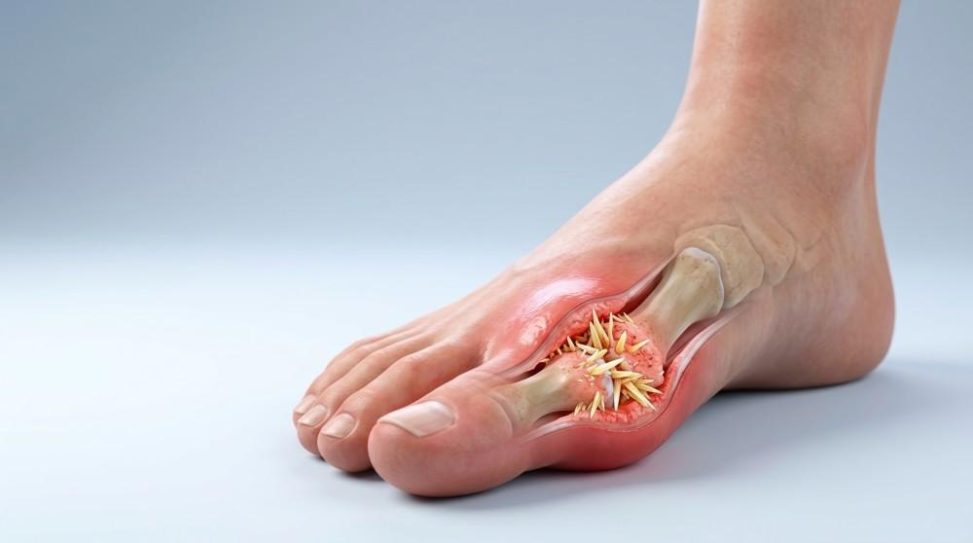
Gout is a form of inflammatory arthritis that can cause sudden and intense pain, swelling, warmth, and tenderness around a joint. It develops when uric acid levels become high enough for urate crystals to form and accumulate in and around joints.
Because gout can be extremely painful, many people look for quick ways to remove uric acid from the body. However, there is no single food, drink, or home remedy that can instantly dissolve established urate crystals.
The good news is that gout can often be managed effectively. Lowering uric acid to an appropriate level over time can help prevent new crystals from forming and can gradually dissolve crystals that have already accumulated.
Understanding how uric acid works and making sustainable lifestyle choices can therefore play an important role in protecting joint health.
What Is Uric Acid?
Uric acid is produced when the body breaks down substances called purines.
Purines occur naturally in the body and are also found in many foods. Most uric acid is removed through the kidneys and leaves the body in urine.
When the body produces too much uric acid or the kidneys do not remove enough, uric acid can build up in the bloodstream.
If levels remain high, urate crystals can eventually form.
These crystals can trigger the intense inflammation associated with gout.
How Do Uric Acid Crystals Cause Gout?
Urate crystals can accumulate in joints and surrounding tissues.
When the immune system reacts to these crystals, it can cause significant inflammation.
A gout flare may develop suddenly, sometimes during the night, and can cause a joint to become extremely painful, swollen, red, and warm.
The big toe is a classic location, but gout can affect other joints, including the ankles, knees, wrists, fingers, and elbows.
Not everyone with elevated uric acid develops gout, but persistent high uric acid can increase the risk.
Can You Quickly Remove Uric Acid Crystals?
This is one of the most important misconceptions about gout.
There is no proven drink or food that can rapidly flush established urate crystals out of your joints.
The process of dissolving crystals generally requires keeping uric acid at a sufficiently low level for an extended period.
For people who need urate-lowering medication, treatment is often guided by a target blood urate level. The American College of Rheumatology recommends a treat-to-target approach, with a serum urate goal of less than 6 mg/dL for people receiving urate-lowering therapy.
As uric acid remains below the appropriate target over time, existing crystals can gradually dissolve and the risk of future flares can decrease.
Why Long-Term Management Matters
Treating only the pain of an occasional gout attack does not necessarily address the underlying problem.
If uric acid remains elevated, new crystals can continue to form between attacks.
Over time, repeated gout flares can become more frequent or affect additional joints.
Some people can also develop tophi, which are larger collections of urate crystals under the skin.
Long-term uric-acid management can help prevent these complications.
Drink Enough Fluids
Adequate hydration can support normal kidney function and help the body eliminate uric acid through urine.
Water is generally the simplest choice.
Rather than drinking an enormous amount at once, it is usually more practical to drink fluids regularly throughout the day.
However, people with certain kidney, heart, or liver conditions may have fluid restrictions and should follow their healthcare professional’s recommendations.
Hydration can support overall health, but it should not be presented as a cure for gout.
Limit Sugary Drinks
Sugar-sweetened beverages can be a concern for people trying to reduce their risk of gout.
Drinks containing high amounts of fructose can contribute to increased uric acid production.
Regularly consuming soda, sweetened fruit drinks, and other beverages high in added sugar may therefore be unhelpful for people with gout.
Replacing these drinks with water or unsweetened beverages can be a practical change.
Whole fruit is generally a different situation because it also provides fiber and other nutrients.
Be Mindful of Alcohol
Alcohol can increase the risk of gout attacks in some people.
Beer and spirits are particularly associated with increased gout risk, while wine may also contribute depending on the amount consumed and the individual.
If you frequently experience gout flares, discussing alcohol consumption with your healthcare professional may be worthwhile.
Reducing or avoiding alcohol can be especially useful if you notice that drinking tends to precede your attacks.
Pay Attention to High-Purine Foods
Purines are found naturally in many foods, so avoiding every source is neither practical nor necessary for most people.
However, certain foods contain particularly high levels of purines and may increase uric acid or trigger flares in susceptible individuals.
Examples include organ meats such as liver and kidney, some types of seafood, and certain meat products.
Instead of focusing on a completely restrictive diet, many people can benefit from emphasizing a varied diet with vegetables, whole grains, low-fat dairy products, and appropriate sources of protein.
Individual triggers can also vary.
Choose More Plant-Based Foods
Vegetables, fruits, whole grains, beans, and other plant foods can be part of a balanced diet for people with gout.
It is worth noting that some plant foods contain purines, but plant-based purines generally do not appear to carry the same gout risk as purine-rich animal foods.
A balanced eating pattern is therefore usually more practical than trying to eliminate every food that contains purines.
Low-Fat Dairy May Be Helpful
Low-fat milk and yogurt can fit well into a diet designed to support gout management.
Dairy foods provide protein and other nutrients while generally being lower in purines than many animal-based foods.
Plain yogurt can also be combined with fruit, oats, or nuts for a nutritious meal or snack.
Choose products with less added sugar when possible.
Maintain a Healthy Weight
Excess body weight can increase the risk of high uric acid and gout.
If weight loss is appropriate for you, gradual and sustainable weight reduction may help improve several factors associated with gout.
However, extreme dieting and rapid weight loss are not recommended.
Very restrictive diets, prolonged fasting, or crash diets can sometimes increase uric acid levels and may trigger gout symptoms.
A balanced approach is generally better.
Exercise Regularly
Regular physical activity supports overall health and can help with maintaining a healthy weight.
Walking, cycling, swimming, strength training, and other activities can be useful depending on your fitness level and medical condition.
During an acute gout flare, however, putting pressure on a painful, swollen joint may be difficult.
Resting the affected area and following medical advice can be more appropriate until the inflammation improves.
Know Your Medications
Some medications can affect uric acid levels.
For example, certain diuretics used for blood pressure or fluid-related conditions can increase uric acid in some people.
That does not mean you should stop taking prescribed medication.
Instead, talk with your healthcare professional if you experience repeated gout attacks or have concerns about your medications.
Your clinician can determine whether another option is appropriate for your individual situation.
Medicines That Lower Uric Acid
For people with recurrent or complicated gout, lifestyle changes alone may not be enough.
Urate-lowering medications can reduce blood uric acid and gradually eliminate accumulated crystals.
Allopurinol is commonly recommended as a first-line urate-lowering medication for many patients. Other options may be appropriate depending on kidney function, other health conditions, previous reactions, and individual circumstances.
These medications generally work over time rather than providing immediate relief during a flare.
The goal is sustained uric acid control.
What Happens During a Gout Flare?
A gout flare can cause severe pain and inflammation.
Treatment may include medicines such as nonsteroidal anti-inflammatory drugs, colchicine, or corticosteroids, depending on the person’s medical history and the clinician’s recommendation.
The appropriate choice varies from person to person.
Do not assume that an over-the-counter pain reliever is safe for you simply because it is available without a prescription.
Certain medications can be risky for people with kidney disease, stomach ulcers, heart conditions, or other health problems.
Don’t Stop Urate-Lowering Medication During a Flare Without Advice
If you already take medication to lower uric acid, do not make changes to your treatment plan without discussing them with your healthcare professional.
Modern gout management focuses on maintaining uric acid at an appropriate level over time.
Stopping and restarting treatment without medical guidance can make long-term control more difficult.
If you are unsure what to do during a flare, contact your healthcare professional.
When Should You See a Doctor?
A painful, swollen joint should not automatically be assumed to be gout.
Several other conditions can cause similar symptoms.
A healthcare professional may use your medical history, physical examination, blood tests, joint-fluid testing, or imaging to determine the cause.
You should seek medical attention promptly if a painful swollen joint is accompanied by fever, chills, feeling very unwell, or rapidly worsening symptoms.
These can sometimes be signs of an infection, which requires urgent treatment.
What About Natural Remedies?
Many foods and drinks are promoted online as natural gout cures.
Cherries, lemon water, apple cider vinegar, herbal teas, and various supplements are frequently discussed.
Some foods may fit comfortably into a healthy diet, but evidence for many popular home remedies is limited.
Even when a food has potentially beneficial properties, that does not mean it can dissolve established urate crystals quickly.
Be particularly cautious with concentrated supplements.
“Natural” does not automatically mean safe, and supplements can interact with medications or be inappropriate for people with kidney problems.
A Practical Approach to Gout Prevention
Rather than searching for a single miracle remedy, focus on several sustainable habits.
Drink appropriate amounts of water, limit sugary beverages, moderate alcohol, maintain a healthy weight, eat a balanced diet, and pay attention to foods that appear to trigger your attacks.
If you have recurrent gout, work with a healthcare professional to determine whether urate-lowering medication is appropriate.
Regular monitoring of blood uric acid can help determine whether treatment is achieving the desired target.
Final Thoughts
Gout is not simply a problem caused by eating one particular food.
It is a medical condition involving uric acid and the formation of urate crystals, and successful management often requires a combination of lifestyle measures and medical treatment.
Drinking enough water, limiting sugary drinks and excessive alcohol, maintaining a healthy weight, choosing a balanced diet, and staying physically active can support overall health and may reduce gout risk.
However, established urate crystals do not disappear overnight.
For people who need treatment, consistently lowering uric acid to an appropriate target is what allows crystals to gradually dissolve and helps prevent future attacks.
If you experience repeated gout flares or have persistently high uric acid, talk with a healthcare professional rather than relying solely on home remedies. With appropriate long-term management, gout can often be controlled and painful flare-ups can become much less frequent.