
Many homeowners look for simple ways to make their homes less attractive to unwanted pests. Alongside keeping kitchens clean, sealing cracks, storing food properly, and removing standing water, some people turn to plants with strong scents as a natural option.
Certain aromatic plants contain compounds that insects and other pests may find unpleasant. Mint, lavender, rosemary, basil, marigolds, and several other plants are often associated with natural pest control.
However, it is important to keep expectations realistic. A plant placed near a window or doorway will not create an invisible barrier that guarantees your home will remain completely free of mice, spiders, or insects.
Plants may provide some assistance in certain situations, but their effectiveness can vary considerably depending on the pest, plant variety, concentration of aromatic compounds, weather, and how the plant is used.
Here are several plants worth considering and what they may realistically do.
Peppermint
Peppermint is one of the plants most commonly associated with natural pest control.
Its strong aroma comes partly from compounds such as menthol and menthone. These aromatic compounds can have repellent effects against certain insects under some conditions.
Growing peppermint in containers near doors, patios, or windows can be an attractive addition to a home while potentially making some areas less appealing to certain insects.
However, simply having a peppermint plant indoors should not be expected to eliminate an established pest problem.
Peppermint also spreads aggressively when planted directly in the ground, so keeping it in a container can make it easier to manage.
Lavender
Lavender is well known for its pleasant fragrance and is commonly used in gardens, sachets, and household products.
Its aromatic compounds have been investigated for potential insect-repellent properties.
Growing lavender near outdoor sitting areas may therefore be worth considering if you enjoy the plant and its fragrance.
Lavender also prefers plenty of sunlight and well-drained soil, making it particularly suitable for bright areas.
Its potential pest-repelling effect should still be considered supplementary rather than a replacement for effective pest control.
Rosemary
Rosemary is another strongly scented herb that can serve a useful double purpose.
You can grow it as an ornamental plant while also using the leaves in cooking.
The plant contains aromatic compounds that researchers have investigated for insect-repellent activity.
Rosemary grows well in sunny locations and relatively dry soil once established.
Keeping several rosemary plants near outdoor living areas may provide some benefit, although results will depend on the pest and environmental conditions.
Basil
Basil is popular in kitchens because its fresh leaves can be used in sauces, salads, soups, and other meals.
Its strong aroma comes from volatile plant compounds that may influence certain insects.
Keeping basil near a sunny kitchen window or growing it outdoors can therefore be a practical choice.
But basil should not be treated as a complete insect-control solution.
If flies, ants, mosquitoes, or other pests are entering your home in large numbers, identifying and removing the source is much more effective.
Marigolds
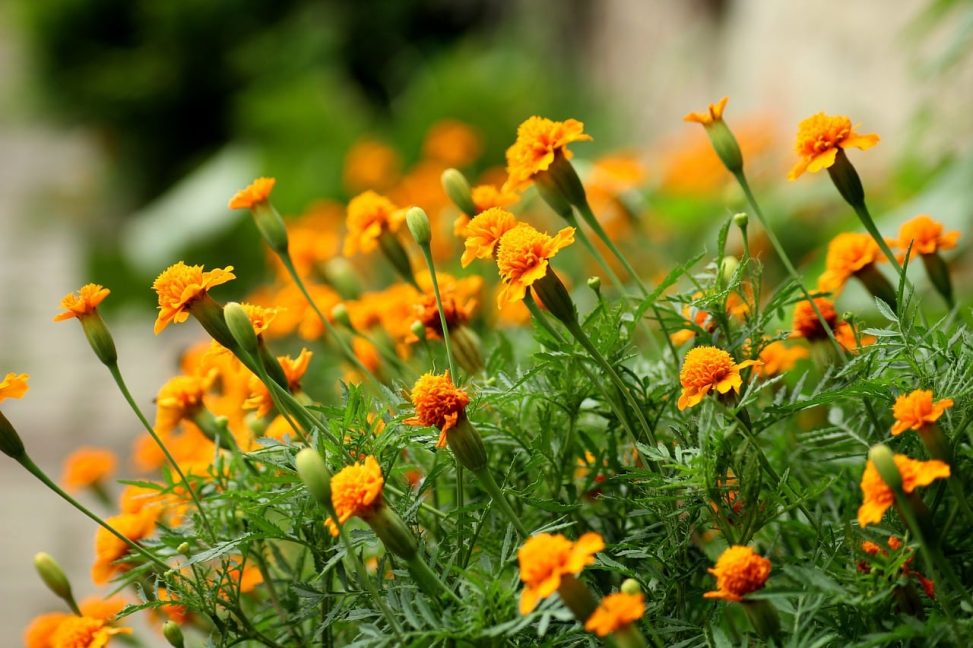
Marigolds are often recommended as companion plants because of their strong scent and the compounds they contain.
They are colorful, relatively easy to grow, and can add visual appeal to gardens, patios, and balconies.
Some research has investigated marigolds and their potential effects on insects, although the results vary depending on the species and pest involved.
Planting marigolds can be worthwhile if you enjoy them, but don’t rely on them alone to protect an entire garden or house from pests.
Catnip
Catnip is another plant with an interesting relationship with insects.
It contains nepetalactone, a compound that has demonstrated insect-repellent activity in scientific research.
Studies have investigated catnip-derived compounds against certain mosquitoes and other insects.
However, there is an important practical consideration: catnip can attract cats.
If you have cats that are likely to damage the plant or become overly interested in it, another option may be more suitable.
Lemongrass
Lemongrass has a fresh citrus-like aroma and is widely used in cooking and beverages.
Some lemongrass-related essential oils contain compounds that have been studied for insect-repellent properties.
Growing lemongrass around an outdoor living space may be enjoyable and may provide some scent-based deterrent effect.
But the amount of aromatic compound released by a living plant is not necessarily equivalent to the concentration found in an essential oil or commercial repellent.
This is an important reason why results from laboratory studies of concentrated extracts should not automatically be applied to a potted plant.
Chrysanthemums
Chrysanthemums are another interesting option because some varieties contain natural compounds related to pyrethrins.
Pyrethrins are insecticidal compounds derived from certain chrysanthemum flowers and are used in some commercial pest-control products.
However, growing chrysanthemums in your garden does not mean that the plants will function like a commercial insecticide.
The concentration, formulation, and method of application are completely different.
Enjoy chrysanthemums as garden plants, but don’t assume they will eliminate an insect infestation.
Mint
Mint is another strongly scented plant that many people associate with pest control.
Its aroma may be unpleasant to some insects, and mint is also useful in cooking and beverages.
Like peppermint, however, mint can spread rapidly.
Growing it in containers can help prevent it from taking over garden beds.
If you use mint as part of a pest-management strategy, combine it with practical measures such as sealing entry points and keeping food properly stored.
Do These Plants Repel Mice?
This is where expectations need to be especially realistic.
Strong-smelling plants are sometimes promoted as a way to keep mice away.
Although certain odors may temporarily discourage rodents from entering or exploring an area, there is not strong evidence that simply growing a particular plant around your house will reliably prevent a mouse infestation.
Mice are highly adaptable animals.
If they can find food, water, shelter, and a convenient entry point, a plant’s smell may not be enough to stop them.
For mice, physical exclusion is generally much more important.
How to Make Your Home Less Attractive to Mice
If mice are a concern, start by looking for potential entry points.
Mice can squeeze through surprisingly small openings.
Inspect areas around pipes, vents, doors, foundations, and utility lines.
Seal gaps with appropriate materials and repair damaged screens or doors.
Keep food in sealed containers and clean crumbs and spills promptly.
Pet food should also be stored appropriately rather than left accessible overnight.
These steps can be much more effective than relying on a plant.
What About Spiders?
Spiders are sometimes said to dislike strong scents such as peppermint or lavender.
Some essential oils have demonstrated repellent effects against certain spider species in experimental settings.
However, this does not mean that placing a mint plant in a room will make every spider leave.
Spiders also enter homes because they can find shelter and a supply of other insects.
Reducing the insects that spiders feed on, sealing gaps around windows and doors, and keeping areas clean can help reduce the conditions that attract them.
Why Plants Alone Usually Aren’t Enough
A living plant releases aromatic compounds into the surrounding environment, but the concentration can be relatively low and inconsistent.
Temperature, sunlight, airflow, plant size, and humidity can all affect how much scent is released.
A commercial repellent is formulated to deliver a controlled concentration of an active ingredient.
That is very different from relying on a plant growing in a pot.
Therefore, plants are best viewed as one small part of a broader approach to pest prevention.
Use Plants as Part of a Bigger Strategy
If you want to reduce household pests naturally, combine plants with proven prevention techniques.
Keep food sealed.
Clean kitchen surfaces regularly.
Remove standing water.
Repair leaking pipes and faucets.
Keep garbage containers covered.
Trim vegetation away from doors and windows.
Install or repair window screens.
Seal cracks and gaps around the structure of your home.
These measures remove the food, water, and access that pests need to survive.
Outdoor Plants Can Still Be Useful
Even if a plant does not completely repel pests, it can provide other benefits.
Herbs such as rosemary, basil, mint, and lemongrass can be useful in cooking.
Lavender and marigolds can add color and fragrance to outdoor spaces.
A diverse garden can also support beneficial insects and pollinators when plants are chosen appropriately.
This makes planting for pest management worthwhile even when the direct repellent effect is modest.
Be Careful With Essential Oils
Many online pest-control recipes use essential oils made from plants.
Essential oils are highly concentrated and should not be treated as equivalent to the living plant.
Some can irritate skin, eyes, or airways when used improperly.
They can also be dangerous to pets, particularly cats and dogs, depending on the substance and exposure.
Never assume that because a plant is safe to grow or eat, its concentrated essential oil is automatically safe.
Follow product instructions carefully.
Don’t Apply Homemade Plant Extracts Without Knowing the Risks
Another common DIY approach involves crushing plants and spraying homemade extracts around the home.
This can create unpredictable concentrations and may cause irritation or staining.
It can also expose children or pets to substances that have not been tested in the homemade formulation.
If you decide to use a commercial botanical pest-control product, follow its label directions.
For serious infestations, professional pest management may be safer and more effective.
What Actually Works Best?
The most effective pest-control strategy depends on the pest.
For insects, reducing food and water sources, repairing screens, removing standing water, and sealing entry points can make a significant difference.
For mice, exclusion and proper food storage are especially important.
For spiders, reducing other insects and closing gaps around the building can reduce opportunities for them to enter.
Plants can complement these efforts but generally should not be the primary method when an infestation already exists.
When to Get Professional Help
If you repeatedly see mice, large numbers of insects, signs of nesting, or significant property damage, a professional pest-control assessment may be appropriate.
This is particularly important when pests may carry disease, contaminate food, damage electrical wiring, or cause structural problems.
Trying one plant after another may delay finding the actual source of the infestation.
Professional pest control can identify entry points and determine what type of pest is present.
Final Thoughts
Plants such as peppermint, lavender, rosemary, basil, marigolds, catnip, lemongrass, mint, and certain chrysanthemums are often associated with natural pest control.
Some of the compounds found in these plants have demonstrated repellent or insect-related effects in laboratory research.
But there is a big difference between a concentrated plant extract and a living plant sitting in a pot.
A few plants around your home cannot guarantee that you will never see mice, spiders, or insects again.
If you enjoy these plants, however, there is little reason not to incorporate them into your garden or living spaces where appropriate. They can provide fragrance, beauty, culinary benefits, and potentially some supplementary pest-deterrent effects.
For meaningful pest prevention, focus on the basics: seal entry points, keep food stored securely, remove standing water, maintain screens, clean regularly, and address infestations promptly.
Think of pest-repelling plants as an extra layer of prevention—not a magic shield around your home.