Noticing purple, blue, or reddish veins on your legs can be surprising, especially if they seem to have appeared recently. For many women, visible veins are simply a cosmetic concern. In other cases, however, changes in the appearance of leg veins may be associated with problems involving blood flow or the veins themselves.
The good news is that visible veins do not automatically mean something is wrong. Spider veins and varicose veins are common, and several factors can make them more noticeable over time.
Understanding why these veins appear, what symptoms to watch for, and when to seek medical advice can help you make informed decisions about your health.
What Causes Purple Veins to Appear?
Veins carry blood back toward the heart. When veins become more visible through the skin, they may appear blue, purple, or reddish depending on their size, depth, and the person’s skin tone.
One common reason is simply that the veins are close to the surface of the skin.
As people age, skin can become thinner and lose some of its elasticity, which may make underlying veins easier to see.
Genetics can also play a major role. If close family members have visible veins or varicose veins, you may be more likely to develop them yourself.
Spider Veins Are a Common Cause
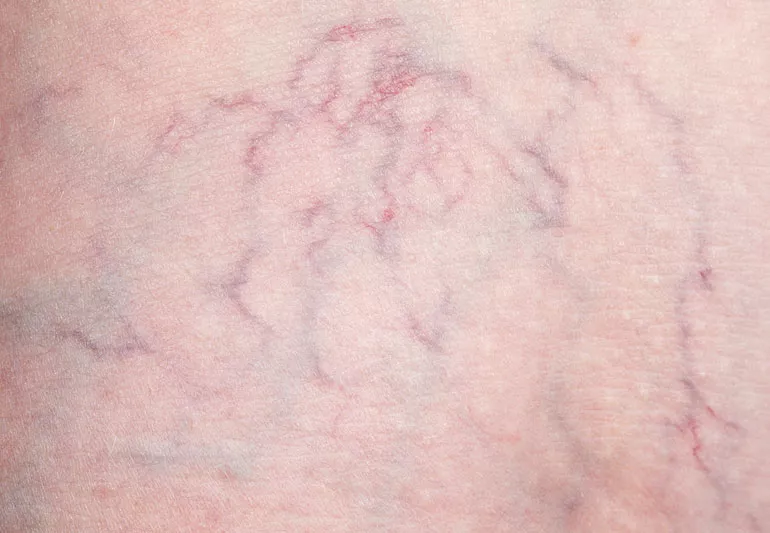
Spider veins are small blood vessels that appear close to the surface of the skin.
They can look like thin purple, blue, or red lines and may form web-like or branching patterns.
They are especially common on the legs and thighs.
For many people, spider veins are primarily a cosmetic concern and do not cause significant health problems.
However, if the area becomes painful, swollen, itchy, or changes significantly, it is worth discussing with a healthcare professional.
Varicose Veins Look Different
Varicose veins are larger, swollen veins that can appear twisted or raised beneath the skin.
They are often dark blue or purple and commonly develop on the legs.
According to the Mayo Clinic, varicose veins occur when valves inside the veins do not work properly, allowing blood to pool in the veins rather than moving efficiently toward the heart. (mayoclinic.org)
Some varicose veins cause no symptoms, while others may produce aching, heaviness, swelling, itching, or discomfort.
Standing for Long Periods May Contribute
Spending many hours standing or sitting can contribute to discomfort associated with leg veins.
When you remain in one position for extended periods, the muscles that help move blood through the legs are less active.
This can contribute to blood pooling in the lower legs.
If your daily routine requires prolonged sitting or standing, taking regular movement breaks can be helpful.
Simple activities such as walking around for a few minutes, stretching your legs, or changing position regularly can encourage circulation.
Pregnancy Can Make Veins More Noticeable
Pregnancy can cause noticeable changes in the veins.
During pregnancy, the amount of blood circulating through the body increases. At the same time, the growing uterus can place pressure on veins in the pelvis and lower body.
Hormonal changes can also affect the walls of the veins.
As a result, some women develop spider veins or varicose veins during pregnancy.
In many cases, these veins become less noticeable after delivery, although they may not disappear completely.
Pregnant women who experience sudden or significant swelling, pain, or other concerning symptoms should contact their healthcare provider.
Hormonal Changes May Play a Role
Women may notice changes in their veins during periods of hormonal fluctuation.
Pregnancy, menopause, and certain hormone-related treatments can influence the circulatory system and may affect the appearance or symptoms of veins.
This does not mean that visible veins are necessarily caused by hormones.
Many factors can contribute, including genetics, age, body weight, activity level, and previous pregnancies.
If you notice a significant change and are unsure why it is happening, a healthcare professional can help determine whether further evaluation is appropriate.
Age Can Make Veins More Visible
Visible veins can become more noticeable with age.
The walls and valves of veins may gradually become less efficient over time. Skin also tends to become thinner, making veins easier to see.
This means that a woman may notice purple or blue veins that were not obvious when she was younger.
Age-related changes are common, but symptoms such as persistent pain, swelling, skin changes, or sores should not simply be dismissed as part of getting older.
Family History Matters
Genetics can influence the likelihood of developing varicose veins.
If your mother, father, or other close relatives have a history of varicose veins, you may have a higher chance of developing them.
This is one reason why two women with similar lifestyles may have very different experiences with visible veins.
You cannot change your family history, but maintaining an active lifestyle and paying attention to symptoms can still support overall leg health.
When Purple Veins Are Usually Not an Emergency
If you have small, stable purple or blue veins that are not painful and have not changed significantly, they are often not an emergency.
Spider veins, for example, are commonly harmless.
Still, appearance alone cannot provide a diagnosis.
If you are concerned about new or changing veins, particularly if you have other symptoms, a healthcare professional can examine the area and determine whether further evaluation is needed.
Symptoms That Deserve Medical Attention
Certain symptoms should receive more attention than the appearance of veins alone.
These can include persistent leg pain, swelling, warmth, skin discoloration, itching, heaviness, or changes that continue to worsen.
Varicose veins can sometimes be associated with complications such as skin changes, ulcers, inflammation, or blood clots. (mayoclinic.org)
A healthcare professional can determine whether your symptoms are related to a vein problem or another condition.
Sudden Leg Swelling Should Not Be Ignored
A particularly important warning sign is sudden swelling in one leg, especially when it occurs with pain, tenderness, warmth, or redness.
These symptoms can occur with a blood clot in a deep vein, known as deep vein thrombosis (DVT).
The CDC advises seeking medical attention for symptoms that may indicate DVT, including swelling, pain or tenderness, warmth, and skin discoloration. (cdc.gov)
A blood clot can become dangerous if part of it breaks away and travels to the lungs.
Chest Pain or Breathing Problems Require Urgent Care
If leg symptoms occur along with sudden difficulty breathing, chest pain, coughing up blood, dizziness, or a rapid heartbeat, seek emergency medical attention.
These can be symptoms of a pulmonary embolism, which can occur when a blood clot travels to the lungs.
The CDC considers pulmonary embolism a serious and potentially life-threatening condition requiring immediate medical attention. (cdc.gov)
This is very different from ordinary spider veins and should never be treated as a cosmetic issue.
Staying Active Can Support Leg Health
Regular movement is one of the simplest ways to support healthy circulation.
Walking, swimming, cycling, and other forms of physical activity encourage the muscles in the legs to work.
If you spend much of the day sitting, consider getting up periodically and moving around.
If your work requires long periods of standing, changing position and walking when possible may also help reduce discomfort.
You do not need an extreme exercise routine. Consistent daily movement can be beneficial.
Maintaining a Healthy Weight May Help
Body weight can influence pressure on the veins in the legs.
If you are carrying excess weight, gradually moving toward a healthy weight through balanced nutrition and regular activity may reduce some strain on the circulatory system.
This should be approached as a health goal rather than simply a cosmetic goal.
Every woman’s healthy weight is different, and individual recommendations should take medical history and other factors into account.
Elevating Your Legs May Reduce Discomfort
Some people with varicose veins experience less heaviness or swelling when they elevate their legs.
Raising the legs above the level of the heart for periods of time can encourage blood to move away from the lower legs.
However, this is a comfort measure rather than a treatment for every vein condition.
If swelling or discomfort persists, medical evaluation is more appropriate than relying solely on home measures.
Compression Stockings May Be Recommended
Compression stockings are sometimes used to improve symptoms associated with certain vein conditions.
They apply graduated pressure to the legs, which can help improve blood flow and reduce swelling in some people.
However, compression garments are not appropriate for everyone.
If you are considering them because of significant leg symptoms, ask a healthcare professional whether they are suitable for you.
Treatment Is Available When Needed
If varicose or spider veins are causing significant symptoms or affecting quality of life, several treatment options may be available.
Depending on the condition, a healthcare professional may discuss procedures such as sclerotherapy, laser treatment, or other minimally invasive approaches.
Treatment decisions depend on the type and severity of the vein problem, your symptoms, medical history, and personal preferences.
Not every visible vein needs treatment.
Final Thoughts
Purple, blue, or reddish veins on the legs are common and do not automatically indicate poor health.
They may be simple spider veins, visible surface veins, or varicose veins. Genetics, age, pregnancy, hormonal changes, prolonged sitting or standing, and other factors can all influence how noticeable veins become.
What matters most is paying attention to changes and accompanying symptoms.
Small, stable veins without discomfort are often not a medical emergency. But persistent pain, significant swelling, skin changes, or rapidly worsening symptoms deserve professional evaluation.
Most importantly, sudden swelling or pain in one leg—particularly when combined with warmth or discoloration—should not be ignored because these symptoms can be associated with a blood clot.
And if leg symptoms occur alongside sudden chest pain or difficulty breathing, seek emergency medical care immediately.
Your legs can show many normal signs of aging and circulation changes. Learning to recognize the difference between common cosmetic changes and symptoms that deserve attention can help you take better care of your health.