
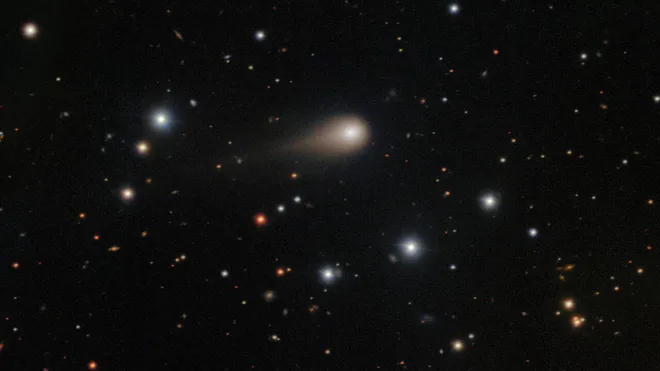
The universe is not a quiet place. Stars explode, black holes devour matter, and galaxies themselves can collide and merge in spectacular displays of cosmic evolution. Recently, the James Webb Space Telescope (JWST) captured one of the most extraordinary galactic gatherings ever observed — five galaxies interacting in a massive cosmic collision.
This rare sight offers astronomers a unique window into how galaxies grow, change, and shape the universe around them.
What Did Webb Discover?
Using its advanced infrared vision, JWST observed a compact group of five galaxies locked in a gravitational dance. While galactic collisions are not unusual, seeing five interacting at once is an incredibly rare event.
These galaxies are pulling on each other with tremendous gravitational forces, causing:
Distorted shapes and elongated tidal tails.
Bursts of new star formation as gas clouds are compressed.
A likely path toward eventual merger into a single, massive galaxy.
Why This Matters for Astronomy
Galactic collisions are key drivers of cosmic evolution. Our own Milky Way is destined to collide with the Andromeda Galaxy in about 4 billion years. By studying groups like this one, astronomers can better predict what that future event might look like.
More importantly, galaxy interactions explain how galaxies grow from small, faint structures into the enormous star cities we see today.
Starbursts and Black Holes
One fascinating effect of galactic collisions is the creation of starburst regions. As galaxies crash together, gas and dust compress, igniting rapid star formation. Some of these newborn stars may evolve into massive supernovae within just a few million years.
At the same time, collisions often funnel material toward the supermassive black holes at the centers of galaxies. This can “switch on” active galactic nuclei — regions so bright they outshine entire galaxies. JWST’s observations suggest this may already be happening in some of the colliding galaxies.
A Rare Glimpse Into the Early Universe
While this group of galaxies lies millions of light-years away, the light captured by JWST has traveled for eons before reaching us. That means astronomers are looking back in time, witnessing galactic collisions as they happened in the distant past.
Such observations help piece together the puzzle of how galaxies like ours evolved in the early universe.
What This Means for the Milky Way
Our galaxy is not isolated. It is part of the Local Group, a cluster of more than 50 galaxies. The eventual collision between the Milky Way and Andromeda will reshape our skies forever. Observing this five-galaxy collision today gives scientists a preview of our own cosmic destiny.
Conclusion
The Webb Telescope’s discovery of five galaxies locked in a rare gravitational embrace reminds us of the dynamic, ever-changing nature of the universe. Far from being static, galaxies are constantly growing, colliding, and transforming — and in billions of years, our own galaxy will join this cosmic dance.
Thanks to JWST, we can now watch these processes unfold in unprecedented detail, helping us understand not just where galaxies come from, but where we ourselves are headed in the grand story of the cosmos.

